
Advanced First Aid
0.00 EGP
Course provides participants with a solid foundation in advanced first aid, with an emphasis on
prevention, practical skills, decision making and dealing with environmental conditions.
This advanced program extends beyond material covered in the Advanced First Aid program. Topics
include accident scene management, group leadership, rescuer responsibility and liability,
prevention of injuries, advanced first aid kits, wound management and managing the trauma
victim. The program includes CPR for the Lay Rescuer.
By the end of this course the participant will be able to:
- Describe the value of first aid to self and others and in remote areas.
- Define the different types of consent.
- Explain the importance of injury prevention and give concrete examples.
- Define the characteristics of an emergency.
- Identify situations that require medical care.
- List the steps that should be taken and the information that should be given when calling EMS.
- Identify the reactions that might be displayed by rescuers before, during, and after an emergency.
- Identify the risks of infectious and communicable diseases.
- Describe the standard precautions first aiders should take to prevent coming into direct contact with infectious agents.
- Describe ways to assist a dying victim and survivors.
- Describe the function of the respiratory system and its various parts.
- Describe the mechanics of breathing.
- Describe the function of the circulatory system and its various parts.
- Describe the function of the nervous system including the central nervous system, the peripheral nervous system, and the autonomic nervous system.
- Describe the roles of the brain and spinal cord in the central nervous system.
- Describe the parts of the skeletal system.
- Describe the purpose of the skin and its three layers.
- List the sequence of victim assessment for responsive and unresponsive victims.
- List the steps involved in a primary check.
- Describe the steps in the primary check for an unresponsive and responsive victim.
- Describe the steps in a secondary check for victims with a significant cause of injury.
- Define heart attack and cardiac arrest.
- Describe the steps in the chain of survival.
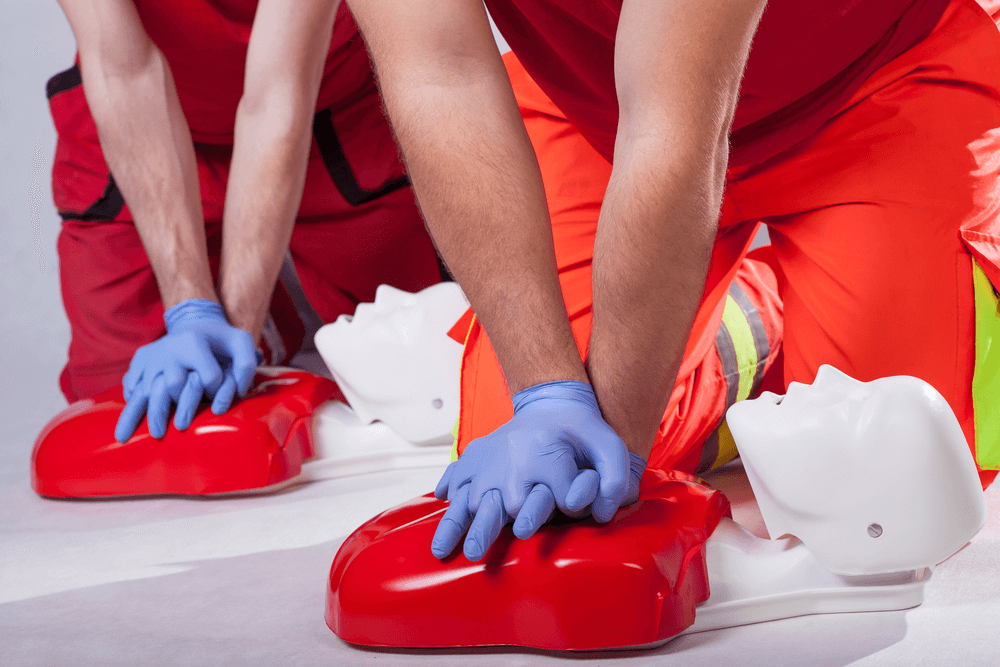
- Describe and demonstrate how to perform CPR for an adult, child, or infant.
- Describe various methods of rescue breathing.
- Identify signs of choking.
- Identify types of airway obstructions.
- Describe and demonstrate how to care for a choking adult, child, or infant.
- Describe the basic workings of the human heart.
- Describe basic care procedures for cardiac arrest victims.
- List and describe the cardiovascular causes of shock.
- List and describe the noncardiovascular causes of shock.
- Describe the difference between compensated and decompensated shock.
- Describe how to generally care for shock.
- Describe the care for anaphylaxis.
- Describe the care for psychogenic shock.
- List and describe the three types of external bleeding.
- Describe how to care for external bleeding.
- Recognize the signs of internal bleeding.
- Describe how to care for and monitor victims of severe internal bleeding.
- Describe the care of minor internal bleeding (bruising).
- Describe the types of open wounds.
- Describe basic care procedures for open wounds.
- Identify signs of infection in an open wound.
- Describe basic care procedures for amputations.
- Describe basic care procedures for blisters.
- Describe the types of and basic care procedures for closed wounds.
- List and describe the types of dressings.
- Describe how to apply a sterile dressing.
- List and describe the types of bandages.
- Describe how to apply a cravat and a roller bandage.
- Describe how to correctly apply an adhesive strip bandage.
- Describe the three different types of burns.
- Describe how burns are evaluated.
- Evaluate thermal burns.
- Describe how to care for thermal burns.
- Evaluate and care for chemical and electrical burns.
- Identify thermal burns, arc burns, and true electrical injuries.
- Identify and care for scalp wounds, skull fractures, and brain injuries.
- Identify and care for injuries affecting the eye, ear and nose.
- Identify and care for spinal injuries.
- Identify and care for closed and open chest injuries.
- Identify and care for closed and open abdominal injuries.
- Identify and care for open and closed fractures.
- Identify and care for joint injuries.
- Identify and care for muscle injuries.
- Identify and care for shoulder injuries.
- Identify and care for elbow injuries.
- Identify and care for hand injuries.
- Identify and care for finger injuries.
- Identify and care for hip joint injuries.
- Identify and care for knee injuries.
- Identify and care for lower leg injuries.
- Identify the different types of splints.
- List the splinting guidelines.
- Splint shoulder injuries.
- Splint upper arm injuries.
- Splint elbow injuries.
- Splint forearm injuries.
- Splint wrist, hand, and finger injuries.
- Splint pelvis and hip injuries.
- Splint thigh injuries.
- Splint knee injuries.
- Splint lower leg injuries.
- Splint ankle and foot injuries.
- Identify and care for a victim having a heart attack.
- Identify and care for a victim having a stroke.
- Identify and care for a victim suffering from asthma.
- Identify and care for someone who is hyperventilating.
- Identify and care for a victim who has fainted or may faint.
- Identify and care for a victim who is having a seizure.
- Identify and care for someone who has a diabetic emergency.
- Identify and care for someone with abdominal pain.
- Identify and care for someone experiencing nausea and vomiting.
- Identify and care for someone with diarrhea.
- Identify and care for someone who is constipated.
- Define a poison and the four ways it can enter the body.
- Recognize the signs of ingested poisoning and administer care for victims.
- Recgonize the signs of carbon monoxide poisoning and administer care for victims.
- Recognize and care for victims of animal bites.
- Recognize and care for victims of snake bites.
- Recognize and care for victims of insect stings.
- List and describe the four ways in which the body loses heat.
- Describe the factors that make people more or less susceptible to cold.
- Recognize the signs of freezing cold injuries and administer care for victims.
- Recognize the signs of hypothermia and administer care for victims.
- Recognize the signs of dehydration and administer care for victims.
- Describe ways the body stays cool.
- Describe the effects of humidity on the human body.
- Recognize the signs of heat cramps and administer care for victims.
- Recognize the signs of heat exhaustion and administer care for victims.
- Recognize the difference between heatstroke and heat exhaustion.
- Recogonize the signs of heatstroke and administer care for victims.
- Recognize when CPR should be performed.
- Recognize, reduce, and stabilize joint dislocations.
- Distinguish lightning injuries from electrical injuries, and prioritize treatment of lightning strike victims.
- Describe how to give aid in a motor vehicle crash.
- Describe the guidelines for moving victims.
This course is suited for everyone who at some point in time might face a first aid case and/or have a role as specialized first aider.
The course duration is varying based on participants requirement, however all topics mentioned previously are designed to be covered within 5 Days.
Classroom lectures
Videos
Practical Training and Exersices
Core Certificate for each attendee
The remaining days to start course
This course has passed
Has Sold